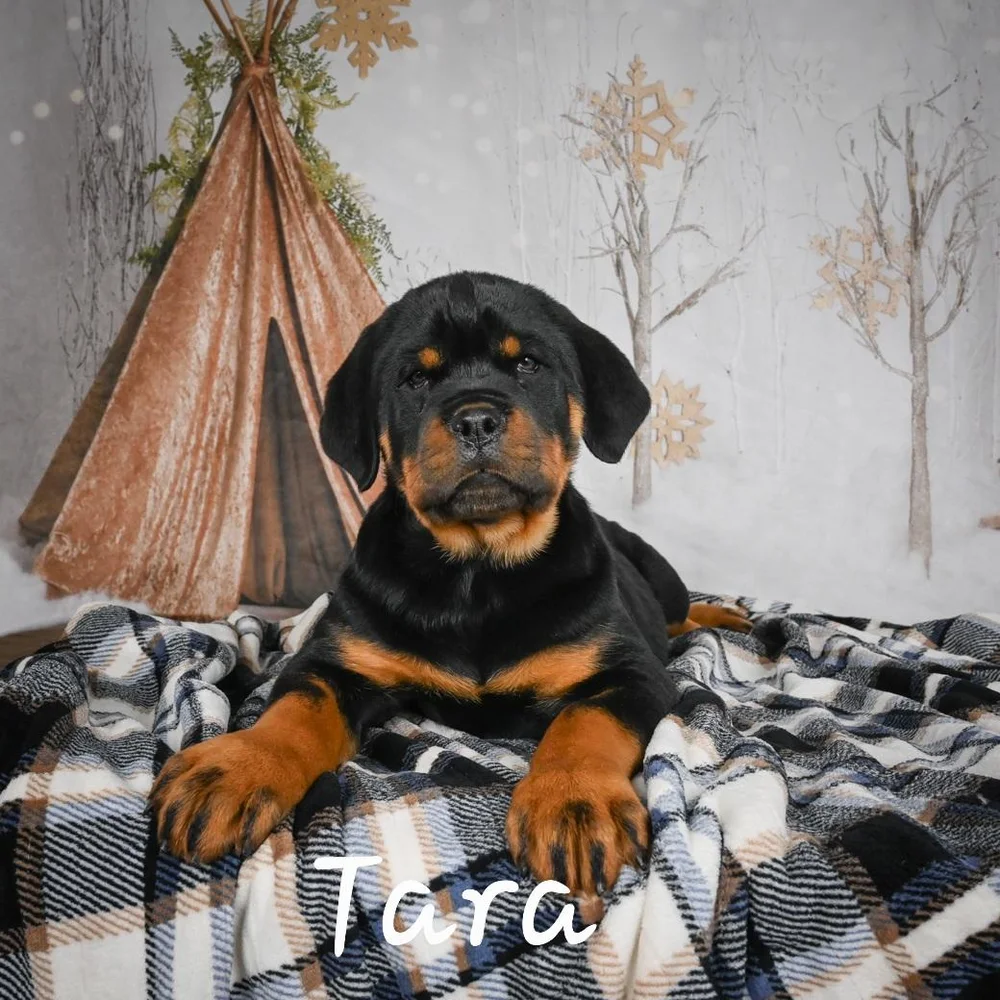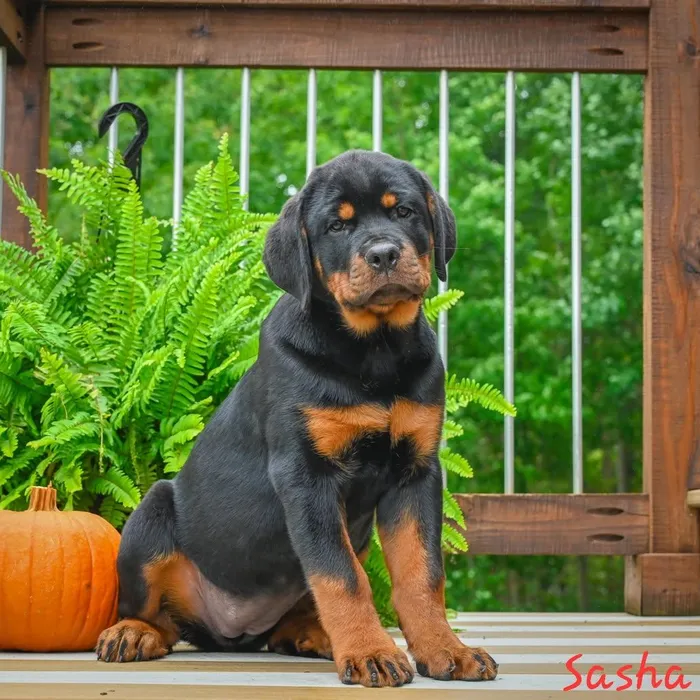
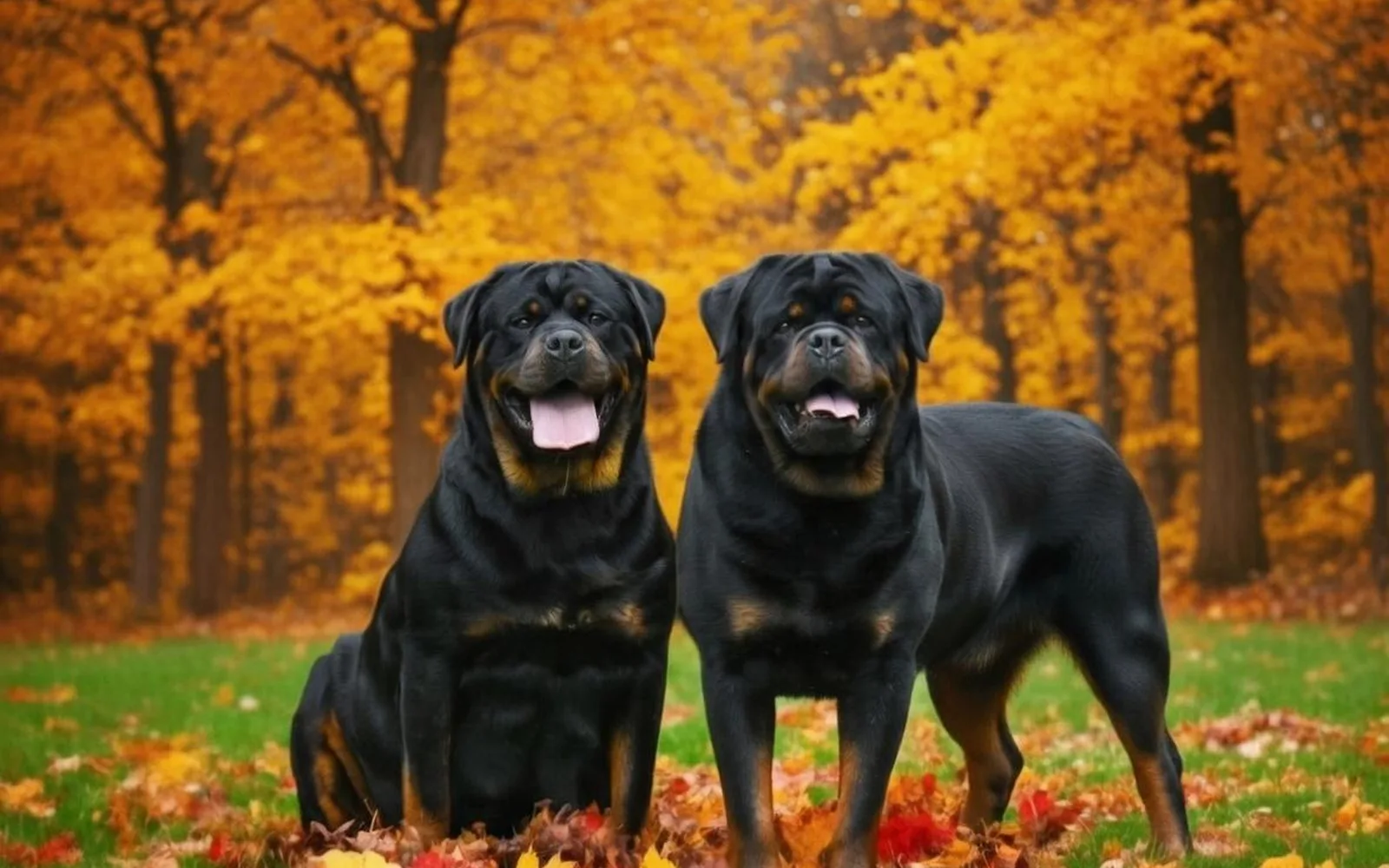
We love Rottweilers. We have raised them on our farm in Charm, Ohio since 2014, and we would not trade a single one. That is exactly why we want every family who calls us to stop and ask an honest question first: is a Rottweiler the right dog for us?
A good match makes for a happy dog and a happy home for the next ten years. A poor match is hard on everyone, and hardest on the dog. Here is what we tell families before they reserve a puppy.
They are big, and they grow fast
An adult Rottweiler typically stands about 22 to 27 inches at the shoulder, and both males and females often weigh well over 100 pounds. This is a big, powerful dog, so plan for that size from the start.
That size arrives quickly. The puppy you carry home in your arms will outweigh most of the dogs on your street before its first birthday. Picture that dog on a leash when a rabbit runs across the road, or greeting your elderly mother at the door. If that picture worries you, take it seriously.
The temperament most people don’t expect
People who meet our dogs for the first time are often surprised. A well-bred, well-raised Rottweiler is calm, affectionate and a little goofy at home. Many of them lean their whole weight against your legs, follow you from room to room and think they are lap dogs.
They are also natural guardians. A Rottweiler watches strangers with a quiet, confident reserve and will place itself between its family and anything it sees as a threat. That instinct is part of the breed. It is also the reason training and socialization are not optional.
A Rottweiler’s strength and loyalty are wonderful in the right hands. In the wrong hands, those same traits become a problem.
Their strength makes training a must
A small dog that pulls on the leash is a nuisance. A 120-pound dog that pulls can pull you off your feet. A Rottweiler that jumps up to say hello can knock over a child or a guest without meaning any harm at all.
The good news is that Rottweilers are smart and eager to work with their people. They learn quickly when training is calm, consistent and started early. Here is what we recommend:
- Start the day your puppy comes home. Name, sit, come and walking politely on a leash can all begin at eight weeks.
- Enroll in a puppy class, then a basic obedience class. A good trainer is worth every dollar with a breed this size.
- Socialize early and often. Puppies learn what is normal in their first few months, and that window starts closing around 16 weeks. Let your puppy safely meet many kinds of people, sounds, surfaces and calm, vaccinated dogs.
- Be the same every day. Rottweilers do best with clear, fair rules that the whole household follows.
- Skip harsh methods. Yelling, rough corrections and intimidation can make a confident dog anxious or defensive. Rewards and patience work far better.
Training never really ends. Plan to keep practicing manners through the teenage months, which for a Rottweiler run until about two years old.
Where you live matters more than you might think
Before you fall in love with a puppy, check the practical side. These are the questions that catch families by surprise:
- Insurance. Rottweilers are on the restricted list of many homeowners and renters insurance companies. Some will charge more, some will exclude dog-related claims, and some will not write a policy at all. Call your insurer and ask before you reserve.
- Renting. Many landlords and apartment communities do not allow Rottweilers, often because of their own insurance. Read your lease, and get permission in writing.
- Your town and neighborhood. Some cities, homeowners associations and military housing have rules about certain breeds. Look them up for where you live now and where you might move.
- Space and a fence. A Rottweiler does not need acres, but it does need room to move and a securely fenced yard. Invisible fences and tie-outs are not a good fit for a strong, protective dog.
Time, exercise and company
Rottweilers are not high-energy in the way a Border Collie is, but they are working dogs. Most adults need at least an hour a day of walks, play and training games. A bored Rottweiler finds its own projects, and they usually involve your furniture or your fence.
They are also people dogs. A Rottweiler that spends long days alone in a kennel or a back yard is not living the life it was bred for. If everyone in your home works long hours, think about who will let the dog out, walk it and spend time with it.
Rottweilers and children
Many of our puppies grow up in homes with kids, and families tell us their Rottweiler is gentle and devoted with their children. That bond is real. Still, size and strength mean some simple rules matter:
- Never leave young children alone with any dog, no matter how sweet.
- Teach children not to climb on the dog, pull ears or bother it while it eats or sleeps.
- Remember that a playful puppy can easily knock down a toddler. Supervise, and give the puppy a quiet space of its own.
- Have the adults, not the children, handle the training and the leash on walks.
Other pets
Rottweilers raised with other dogs and cats often get along with them well. Introductions should be slow and supervised. Some adult Rottweilers do not tolerate other dogs of the same sex, so if you already have a dog, tell us. We are happy to talk through whether a male or a female would be the better fit for your home.
The everyday realities
- Cost. A big dog eats a lot, needs a large crate and bed, and costs more at the vet for medications and procedures that are dosed by weight.
- Grooming. The short coat is easy to care for, but it sheds, especially in spring and fall. Some Rottweilers drool, particularly after a drink of water.
- Getting around. Think about your vehicle. A grown Rottweiler needs a lot more room than a puppy does.
- Lifespan and health. Rottweilers typically live about nine to ten years. The breed can be prone to hip and elbow dysplasia, a heart condition called subaortic stenosis, certain cancers, knee ligament injuries and bloat. This is why health-tested parents and a breeder who stands behind their puppies matter so much.
When a Rottweiler may not be the right choice
We would rather tell you now than have a dog come back to us later. A Rottweiler is probably not the best fit if:
- You are not sure you can physically control a dog that may outweigh you.
- You do not have time for daily exercise and regular training.
- Your lease, insurance or local rules will not allow one.
- The dog would spend most of its day alone.
- You want a guard dog more than a family member. A Rottweiler protects best when it is part of the family, not when it is kept apart from it.
If you are still nodding along
If you read all of this and thought, “That sounds like us,” a Rottweiler may be one of the best decisions your family ever makes. They are loyal, steady, loving companions who take their job of looking after you seriously.
The best next step is to come and see for yourself. Visit our farm by appointment, meet the parents and ask us anything. You can also look at our available puppies and upcoming litters.
Call or text Mary at 330-521-0810 or Jonas at 330-893-0716. We are always happy to talk Rottweilers, even if the answer turns out to be “not right now.”